Overview
California’s Climate Change Assessment is a multi-year research effort bringing together government, academic, tribal, and community partners to generate new data and research on the ways climate change impacts California’s diverse communities. It is designed to set a foundation for understanding climate-related vulnerability throughout California, informing policies, planning, and investments in the state’s resilience and adaptation to climate change.
History & Legislative Background
The State of California has completed five climate assessments:
-
2006
The First Climate Change Assessment in 2006 found that lowering greenhouse gas emissions could significantly reduce climate change impacts across the state, leading to passage that same year of the Global Warming Solutions Act (AB 32), California’s landmark climate law requiring greenhouse gas reductions.
-
2009
The Second Climate Change Assessment in 2009 explored the economic impacts of climate change and showed that California faces significant climate risks even with strong emission reductions, driving the, launch of the first California Climate Adaptation Strategy that year.
-
2012
The Third Climate Change Assessment in 2012 expanded understanding of regional climate vulnerability and supported the passage of new climate adaptation laws such as Chapter 608, Statutes of 2015 (SB 379), which requires local governments to plan for climate risks, and Chapter 606, Statutes of 2015 (SB 246), which established the Integrated Climate Adaptation and Resiliency Program (ICARP).
-
2018
The Fourth Climate Change Assessment in 2018 provided regional and community-level insights and elevated the voices of indigenous and frontline communities. Its findings have been used statewide for planning around wildfire, sea level rise, extreme heat, and energy resilience. It supported CPUC’s rulemaking on electricity and natural gas sector adaptation. The success of this portfolio helped inspire the development of a formal interagency Climate Assessment program, directed by Chapter 136, Statutes of 2020 (SB 1320).
-
2026
The Fifth Assessment, now rolling out,builds upon the previous assessment and showcases the first Tribal Research Program, including a Tribal Advisory Group that guides the Assessment in uplifting tribal expertise and a Tribal Research Grant Program that funds tribally-led climate adaptation projects. The Fifth Assessment promotes a community-driven research approach and addresses how different communities are impacted by unprecedented and more frequent, intense, and longer-lasting extreme events.
Climate Change Assessment Regions
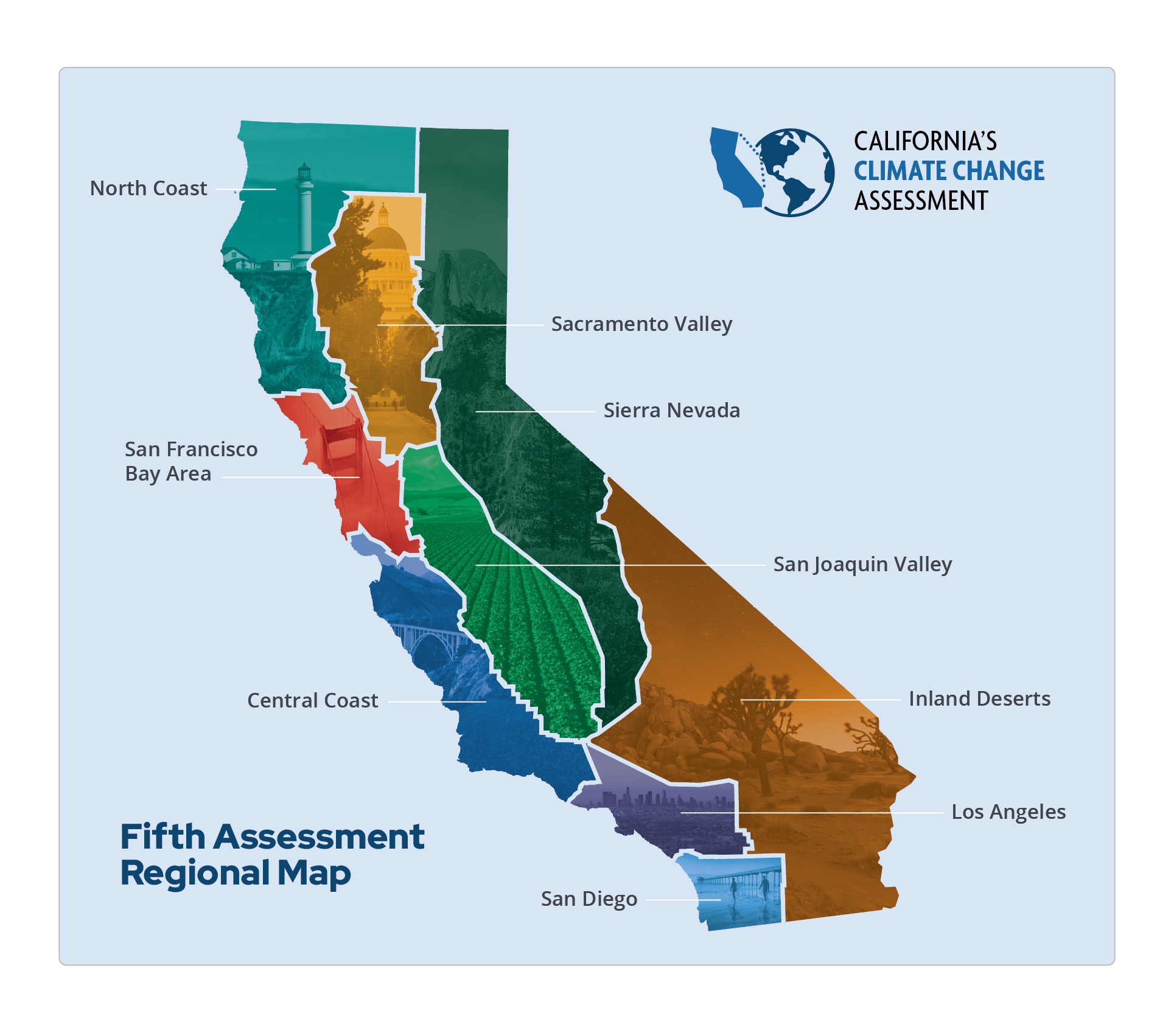
California’s Fifth Climate Change Assessment includes nine Regional Reports that bring together the latest climate science, community input, and adaptation opportunities to meet the needs and context of communities across the state. These reports can inform regional and local vulnerability assessments, adaptation planning, and community resilience efforts.
The Fifth Assessment’s regions were established during the Fourth Assessment, considering climate, economic, and environmental issues throughout the state; the availability of geographical expertise at the time; and alignment with other jurisdictional boundaries (e.g., county) where practicable. The Fifth Assessment implemented updates to the nine regions after collecting extensive feedback throughout the Assessment’s community engagement process. Below are the nine regions for the Fifth Assessment.